

Knowing the density of a sofa is essential to making an informed choice when purchasing. In fact, it directly influences the quality of the support offered, as well as the resistance to wear over time. In this article discover in detail the ideal density for a durable and comfortable sofa.
The density of a comfortable sofa: what is it?
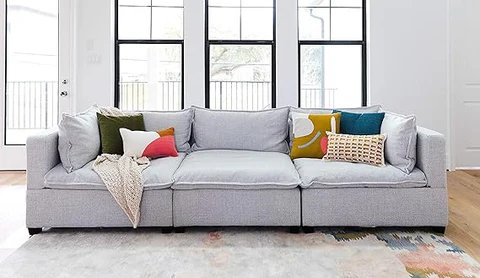
Density refers to the amount of material used per unit volume in making the cushions and seat of the sofa. The higher the density, the more solid and resistant the sofa will be to daily use.
But be careful, it’s not just a question of solidity! Density also plays an important role in comfort. Imagine sinking into a soft sofa, it may feel nice at first, but it will quickly become uncomfortable. Too low a density can lead to premature sagging and loss of support, resulting in back pain and uncomfortable sitting.
There are generally two types of density: the density of foam and the density of filling materials such as fibers and down. Foam density is measured in kilograms per cubic meter (kg/m³) and generally varies between 20 and 60 kg/m³ for quality sofas. As for the padding materials, they have a specific density that also contributes to the comfort and durability of the sofa.
Filling materials for the sofa
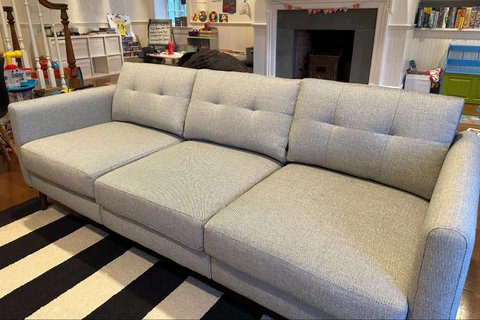
To ensure optimal comfort for your sofa, the choice of padding is essential. Here are the main materials used:
The foam
Foam is the most common filling material for sofas. There are generally three types of foam:
- Polyether foam: with a density between 16 and 25 kg/m³, it is used for back cushions and sofa corners, providing flexible and comfortable support.
- High density polyurethane foam: With a density ranging from 24 to 35 kg/m³, it is ideal for padding seat cushions, providing firm and long-lasting support.
- High resilience foam: with a density exceeding 40 kg/m³, it is used for high-end seat cushions, offering exceptional comfort and greater durability.
Cotton wool
Wadding is a fabric used to stuff cushions, made of cotton, wool, silk or other materials. It wraps around the foam padding to soften the contact between the body and the sofa seat. Its density generally varies between 200 g/m² and 500 g/m².
The feather
Feather is reserved for the highest quality sofas, offering exceptional softness to the seat. Can be combined with high-density foam to enhance support and customize comfort based on individual preferences.
By choosing the right upholstery material based on your comfort and durability preferences, you can ensure that your Sofa It will provide you with years of enjoyment and relaxation.
What density for different parts of the sofa?

The recommended density varies according to different parts of the sofa.
For the sofa seat
The seat of a sofa must offer adequate support to ensure optimal comfort. Ideally, the density of the foam used for the seat should be at least 35 kg/m³. Below this value the suspension may not be sufficient, causing excessive sinking into the cushion. This, in the long term, could cause premature wear of the sofa and compromise its comfort, especially for those who spend a lot of time sitting.
To further improve comfort, we recommend opting for high-resilience foam or cushions with variations in density. So there will be a perfect balance between firmness and flexibility to adapt to different comfort preferences.
For the back of the sofa
The back of a sofa requires a slightly lower density to ensure optimal back comfort. Generally, a density between 20 and 28 kg/m³ is recommended. This density allows for good support while providing a certain level of flexibility to adapt to the contours of the body.
To optimize the comfort of the backrest it is possible to use mixed padding, combining the feather with the foam underneath.
What density to choose for a transformable sofa?
For a sofa bedwe recommend choosing a foam density higher than that of a traditional sofa. Ideally, opt for a density of at least 50 kg/m³ for the seat and mattress of the convertible. This greater density will ensure adequate support when the sofa is used in the sitting position and greater resistance to sagging when used in the sleeping position. Also make sure the convertible’s mattress is the right thickness to provide optimal comfort when opened as a bed.
How to maintain a good density of the sofa over time?
To maintain the density of your sofa over time, some tips are necessary:
- Smooth rotation: Rotate and flip cushions for even wear and balanced filling density distribution.
- Moderate use: Avoid sudden movements and excessive use to avoid premature deformation of the filling, especially for foam cushions.
- Proper cleaning: Clean your sofa regularly according to the manufacturer’s recommendations to remove dirt and stains without damaging the upholstery.
- Varieties in use: Avoid always sitting in the same place to reduce localized wear of the foam cushions.
These maintenance habits will help extend the life and comfort of your sofa.
In conclusion, taking care of the density of your sofa is essential to guarantee its comfort and durability over time. By following some simple maintenance tips and wisely choosing the type of covering, you can create a relaxation space perfectly suited to your needs. Then invest in the density that’s right for you and fully enjoy every moment of comfort on your favorite sofa!