

A permeability rate it is an urban planning index that determines the minimum percentage of free ground surface that must be able to absorb rainwater on a plot of land. This parameter is essential to guarantee the natural runoff of rainwateravoiding floods and contributing to environmental balance in urbanized areas.
Present in land use and occupation laws in many Brazilian municipalities, the permeability rate is a technical requirement that directly affects the planning of buildings, gardens, sidewalks and other open areas on a lot.
What is the permeability rate for?
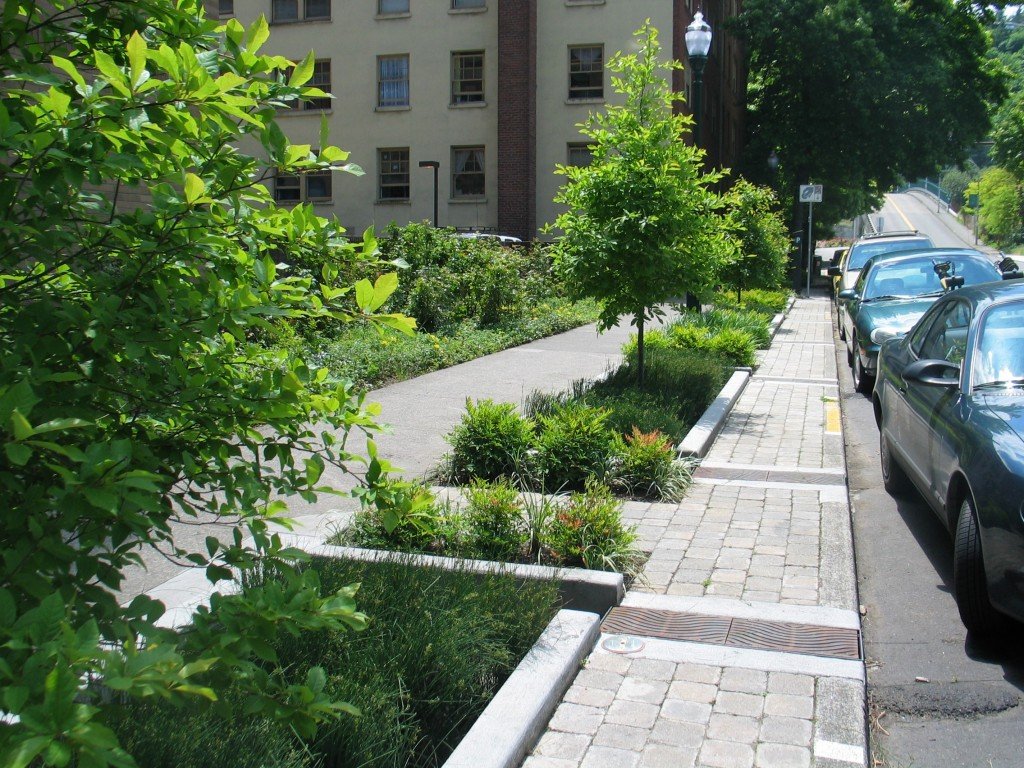
Practical examples of how green areas contribute to the flow of water on urban territory.
The permeability rate is used to ensure that part of a soil remains free infiltration of water into the groundcontributing to the natural hydrological cycle and urban sustainability.
Instead of allowing the entire area to be covered by buildings or impervious sidewalks, this legal requirement ensures that a fraction of the lot serves an important ecological function.
By facilitating the absorption of rainwater, the permeable area reduces the volume of water flowing along the streets, which minimizes the occurrence of flooding and reduces pressure on public sewer systems.
In terms of planning, the permeability rate also directly influences the design of architectural and landscape projects, encouraging the use of greener and more efficient solutions.
How is the permeability rate of a soil calculated?
The permeability rate is calculated by dividing the permeable surface of the lot by the total surface area of the land, multiplying the result by 100 to obtain the percentage value. THE basic formula AND:
Permeability Rate (%) = (Permeable Area / Total Land Area) × 100
For example, if a plot is 500 m² and the legislation requires a permeability of 30%, it is necessary to allocate at least 150 m² to surfaces that allow water infiltration. These 150 m² can consist of natural soil, green areas or certified permeable solutions.
The area considered must be free from waterproofing elements, such as floors, ceramic floors or smoothed concrete, except for the use of materials classified as draining or semi-permeable with proven performance.
What is the minimum permeability rate required by law?
The minimum permeability rate required by law varies depending on the municipality but is generally the same between 15% and 30% of the total surface area. This index may be higher in regions with greater urban density or a history of flooding.
The guidelines are established in municipal general plans and in building and urban planning codes, public documents that guide urban growth. It is therefore essential to consult the legislation in force in the municipality where the land is located.
Some cities, like Sao Paulo, have done so Different parameters depending on the sector of use and lot size, while the index is fixed for all urban properties in other states.
What are the consequences if the permeability rate is neglected?
At an administrative level, failure to comply with this obligation may result rejection of the project at the town hall, work stoppage or application of sanctions for violation of urban planning regulations.
Excessive soil waterproofing even in urban areas reduces natural drainagefavoring the formation of floods, overflows and the collapse of sewage systems.
This compromises the quality of life of the population and can cause material losses both for the property and for the neighborhood. As well as being a missed opportunity to build in a more conscious and integrated way with the environment.
How to increase the permeability of a soil?

Concregram installed in a car park, allows water infiltration without losing functionality.
Increasing the permeability of a soil involves the adoption of strategies that favor the infiltration of water into the soil. Such as replacing impervious surfaces with drainage solutions and using functional landscaping.
This transformation can be carried out both in new projects and in renovations of already occupied land. One of the most effective ways is that creation of draining floorssuch as concregrama, interlocking blocks with a granular base, or porous paving.
All are capable of maintaining infiltration capacity without sacrificing traffic resistance. But another viable solution is to use rain gardens: areas sunken into the ground, full of vegetation and substrates that retain and filter rainwater.
You can also install retention and infiltration cassetteswhich collect excess rainwater and allow it to be reused or gradually returned to the ground. The use of native vegetation, open beds and removal of excessive cover are simple measures that also increase permeability and contribute to environmental balance.
Do you want to know more about other urban interventions? Read also
Hida-Furukawa: the Japanese community united by… carp

About Casoca