
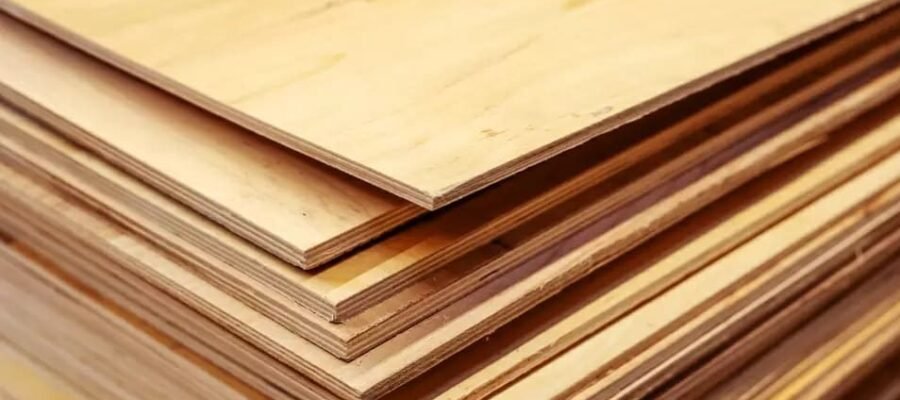
Wood and plywood are materials that play a central role contemporary civil constructionboth in structural elements and in finishing and fixed furniture applications.
Although distinct in composition and function, both share qualities such as lightness, versatility and good thermal and acoustic performance. In addition to energy efficiency and sustainability which expand its use for technical, environmental and economic reasons.
Main characteristics of wood and plywood
A solid wood It derives from the cutting and processing of tree trunks and is widely used in structures, roofing and finishes. Be appreciated for yourself natural beauty, mechanical resistance and variety of native and exotic species.
Already the plywood and derivative panels are produced industrialized products that combine blades (in the case of plywood), wood particles (chipboard) or fibers (MDF and HDF), glued under pressure with specific resins.
This technology allows for dimensional control, standardization and technical performance suited to the desired application. Among the main properties of these materials the following stand out:
- Mechanical resistance: Suitable for both structural stresses and internal components, mainly structural plywood such as OSB.
- Durability: Depending on the type of wood and exposure to the environment, it is essential to use treatments against humidity, insects and fungi.
- Thermal and acoustic insulation: Characteristic inherent to wood and maintained in well-specified panels.
Structural applications
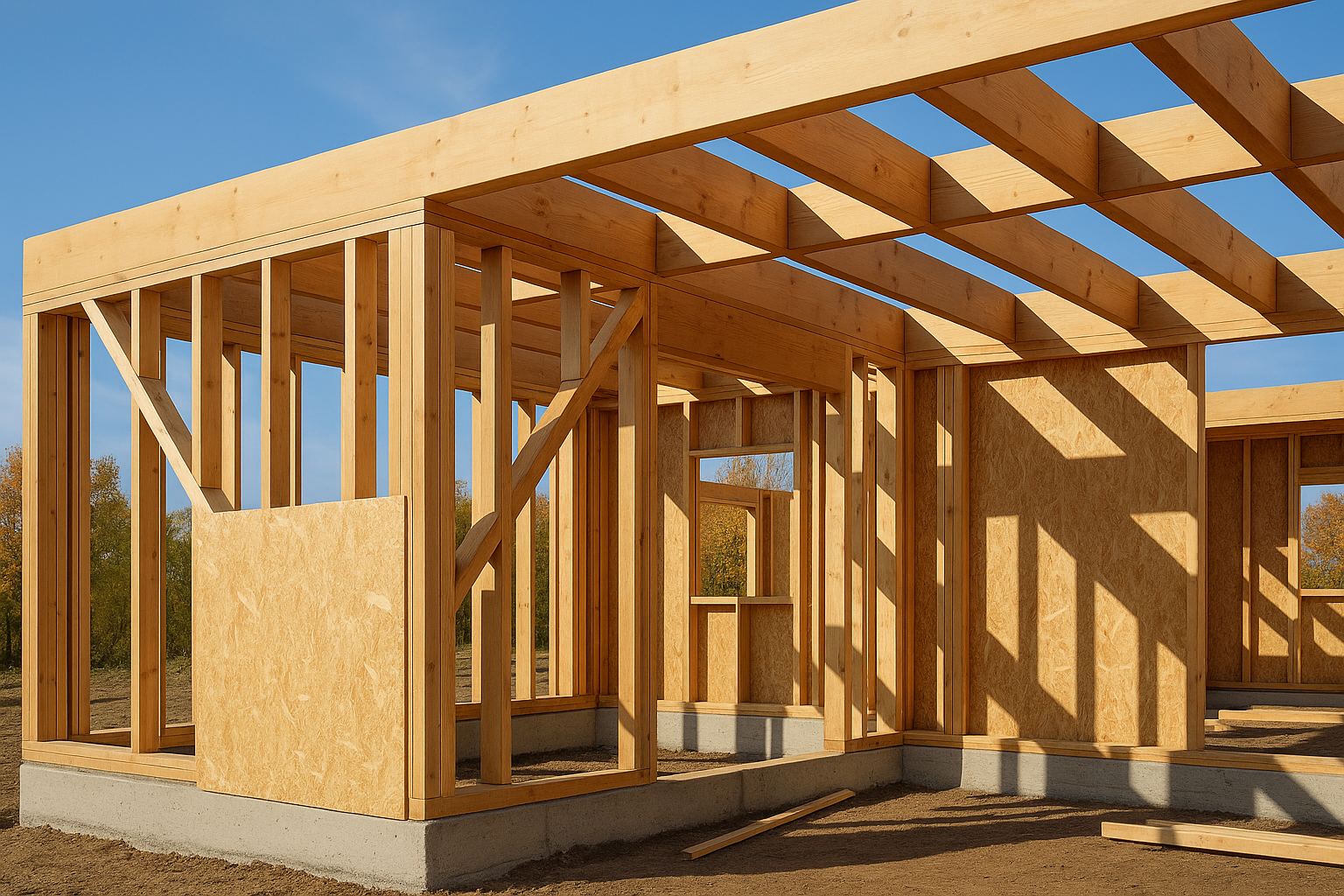
Contemporary applications of wood and plywood in civil construction structures and finishes
Wood and plywood are widely used in systems that require lightness, quick assembly and good technical performance. In roofing, for example, solid or laminated wood beams (lamellar) are elegant and resistant solutions, which allow large, free spans with architectural charm.
Already dry flooring systems and floorsThe use of structural panels such as OSB is common, especially in modular construction and single-story homes. They replace elements such as concrete slabs in works that favor weight reduction and agility in execution.
Non-structural applications
Solutions with wood and plywood go beyond the structure and are present in various elements of architecture and interior design.
Internal closures and partitions
Os MDF and chipboard panels They are widely used in offices, homes and shops, offering a uniform finish and a variety of coatings. They are easy to install and allow for quick changes or renovations.
Linings and decorative coverings
Wooden or perforated MDF coverings provide acoustic performance in environments such as theatres, auditoriums and hotels. Decorative plywood panels add texture and sophistication to residential and business environments.
Concrete formwork
Phenolic plywood They are widely used in temporary reinforced concrete structures. They offer excellent reuse, a smooth finishing surface and easy deformation, as long as they are properly maintained between uses.
Duration x performance
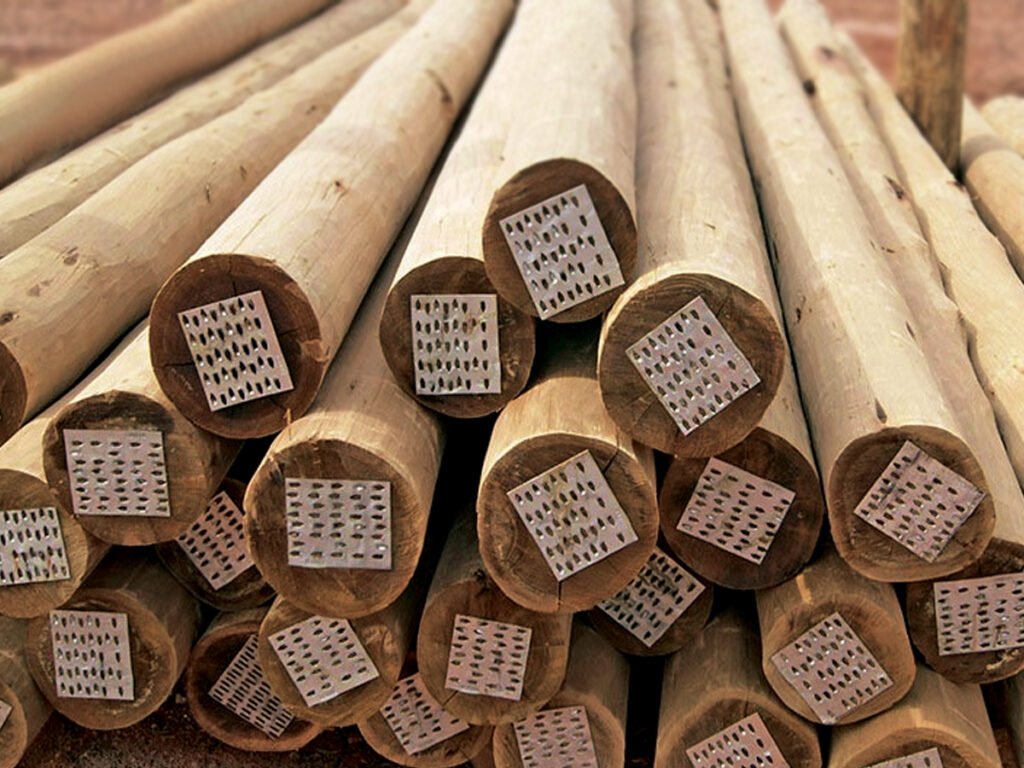
Protection techniques to extend the useful life of wood and plywood
Both solid wood and plywood require attention to durability, especially in environments exposed to humidity or at risk of biological attack. Longevity it depends on a number of factorsincluding the choice of species, type of panel, place of use and maintenance.
The main protection techniques include:
- Industrial treatment with preservatives (such as autoclaving).
- Using phenolic resins in plywood for greater moisture resistance.
- Application of varnishes, paints and sealants that increase their useful life in outdoor or humid environments.
Technical standards and classifications for wood and plywood
A NBR7190 establishes criteria for wooden structures, classifying the species based on their mechanical resistance (traction, compression, bending). This standard defines classes such as C20 or C30, which are fundamental in the choice of wood for beams, beams or shoring.
While the NBR9531 defines requirements such as thickness, number of sheets, moisture resistance and allowable deformations in the plywood. The standard is essential when choosing plywood for concrete forms, siding and cladding substrates.
However, it is important to remember that wooden structures must not only follow the criteria established by ABNT, but also preferably possess them certification seals such as FSC.
Are you interested in new ways of building? Read also:
MDF x MDP: what to consider when choosing?
Claddings as an alternative to wood
Building materials in indigenous architecture

About Casoca