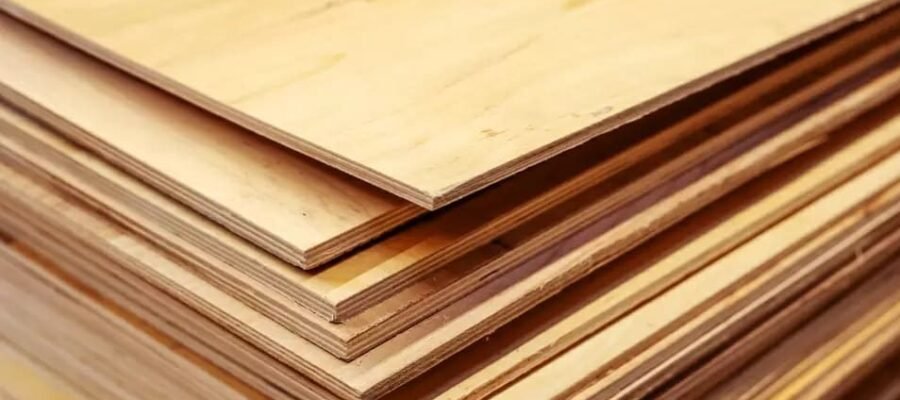
Wood and plywood are materials that play a central role contemporary civil constructionboth in structural elements and in finishing and fixed furniture applications.
Although distinct in composition and function, both share qualities such as lightness, versatility and good thermal and acoustic performance. In addition to energy efficiency and sustainability which expand its use for technical, environmental and economic reasons.
Main characteristics of wood and plywood
A solid wood It derives from the cutting and processing of tree trunks and is widely used in structures, roofing and finishes. Be appreciated for yourself natural beauty, mechanical resistance and variety of native and exotic species.
Already the plywood and derivative panels are produced industrialized products that combine blades (in the case of plywood), wood particles (chipboard) or fibers (MDF and HDF), glued under pressure with specific resins.
This technology allows for dimensional control, standardization and technical performance suited to the desired application. Among the main properties of these materials the following stand out:
- Mechanical resistance: Suitable for both structural stresses and internal components, mainly structural plywood such as OSB.
- Durability: Depending on the type of wood and exposure to the environment, it is essential to use treatments against humidity, insects and fungi.
- Thermal and acoustic insulation: Characteristic inherent to wood and maintained in well-specified panels.
Structural applications
Wood and plywood are widely used in systems that require lightness, quick assembly and good technical performance. In roofing, for example, solid or laminated wood beams (lamellar) are elegant and resistant solutions, which allow large, free spans with architectural charm.
Already dry flooring systems and floorsThe use of structural panels such as OSB is common, especially in modular construction and single-story homes. They replace elements such as concrete slabs in works that favor weight reduction and agility in execution.
Non-structural applications
Solutions with wood and plywood go beyond the structure and are present in various elements of architecture and interior design.
Internal closures and partitions
Os MDF and chipboard panels They are widely used in offices, homes and shops, offering a uniform finish and a variety of coatings. They are easy to install and allow for quick changes or renovations.
Linings and decorative coverings
Wooden or perforated MDF coverings provide acoustic performance in environments such as theatres, auditoriums and hotels. Decorative plywood panels add texture and sophistication to residential and business environments.
Concrete formwork
Phenolic plywood They are widely used in temporary reinforced concrete structures. They offer excellent reuse, a smooth finishing surface and easy deformation, as long as they are properly maintained between uses.
Duration x performance
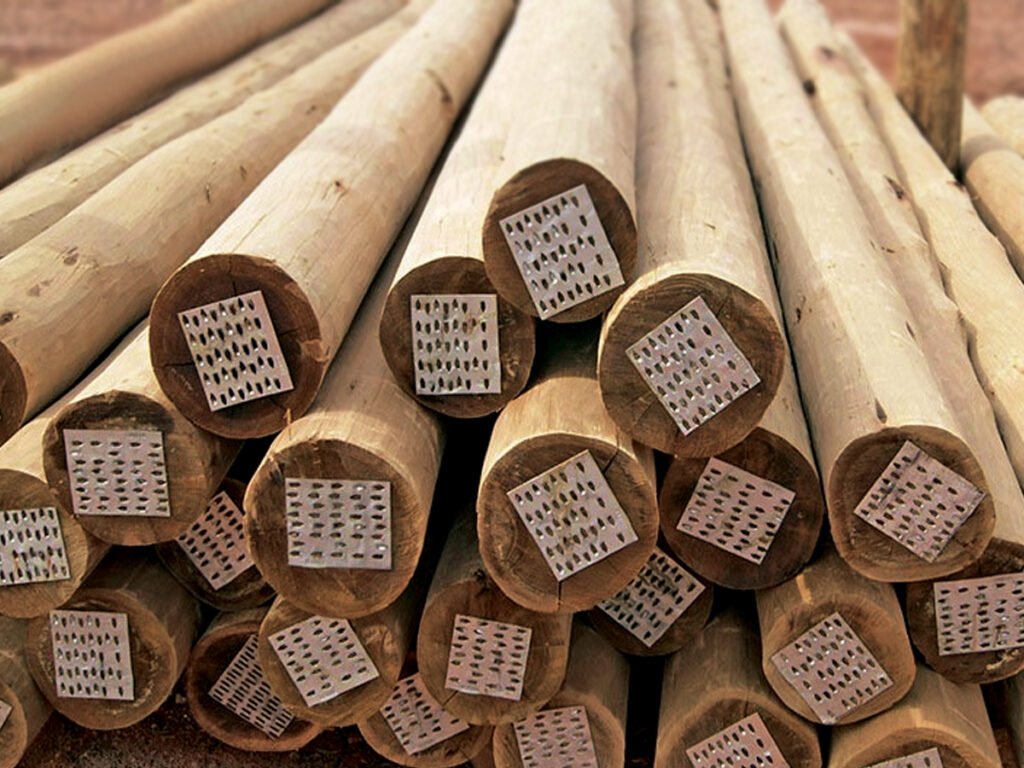
Both solid wood and plywood require attention to durability, especially in environments exposed to humidity or at risk of biological attack. Longevity it depends on a number of factorsincluding the choice of species, type of panel, place of use and maintenance.
The main protection techniques include:
- Industrial treatment with preservatives (such as autoclaving).
- Using phenolic resins in plywood for greater moisture resistance.
- Application of varnishes, paints and sealants that increase their useful life in outdoor or humid environments.
Technical standards and classifications for wood and plywood
A NBR7190 establishes criteria for wooden structures, classifying the species based on their mechanical resistance (traction, compression, bending). This standard defines classes such as C20 or C30, which are fundamental in the choice of wood for beams, beams or shoring.
While the NBR9531 defines requirements such as thickness, number of sheets, moisture resistance and allowable deformations in the plywood. The standard is essential when choosing plywood for concrete forms, siding and cladding substrates.
However, it is important to remember that wooden structures must not only follow the criteria established by ABNT, but also preferably possess them certification seals such as FSC.
Conclusion
Wood and plywood have become essential materials in contemporary civil construction, offering a combination of practicality, efficiency, and sustainability that meets the demands of modern building practices. Their versatility allows them to be used in a wide range of applications, from structural components to interior finishes and fixed furniture. As construction methods continue to evolve, these materials remain highly valued for their ability to adapt to both technical requirements and aesthetic expectations.
One of the most significant advantages of wood and plywood is their lightness compared to many traditional construction materials. This characteristic facilitates transportation, handling, and installation, which can reduce construction time and labor costs. At the same time, despite their relatively low weight, these materials offer impressive strength and durability when properly engineered and applied. This balance between strength and lightness makes them particularly suitable for both residential and commercial construction projects.
Another important benefit is their versatility. Wood and plywood can be used in structural frameworks, wall panels, flooring systems, ceilings, and built-in furniture. Their ability to be cut, shaped, and combined with other materials gives architects and builders great flexibility in design and construction. This adaptability allows for creative architectural solutions while maintaining functional efficiency.
Thermal and acoustic performance is also an important factor that contributes to the popularity of these materials. Wood naturally provides good insulation properties, helping to regulate indoor temperatures and improve energy efficiency within buildings. In addition, its ability to absorb and reduce sound can enhance comfort in living and working environments. These qualities make wood-based materials particularly valuable in modern architecture, where comfort and sustainability are increasingly prioritized.
Sustainability has become another key reason for the growing use of wood and plywood in construction. When sourced from responsibly managed forests, wood is considered a renewable material with a lower environmental impact compared to many alternatives. Its production generally requires less energy, and it can contribute to reducing the overall carbon footprint of a building. As environmental awareness continues to grow, the demand for sustainable construction materials is likely to increase, further reinforcing the relevance of wood-based solutions.
In conclusion, wood and plywood represent an ideal balance between performance, adaptability, and environmental responsibility in contemporary construction. Their structural capabilities, combined with aesthetic appeal and sustainable potential, make them valuable resources for architects, engineers, and builders seeking efficient and responsible building solutions. As the construction industry continues to prioritize sustainability and innovation, these materials will remain central to the development of modern and environmentally conscious architecture.
latest post
Furnishing a villa in Mogoșoaia for a family with three children
Stoneware and Terracotta in Neutral Shades

The Loft – an unconventional space created by Beelive
How did you discover your inclination towards the field of interior design?

Complex offer for beneficiaries
Kitchen tile and tile combinations

Choose the perfect idea to furnish your bathroom
How to correctly mount a decorative plinth
How to choose a background in the Room function