
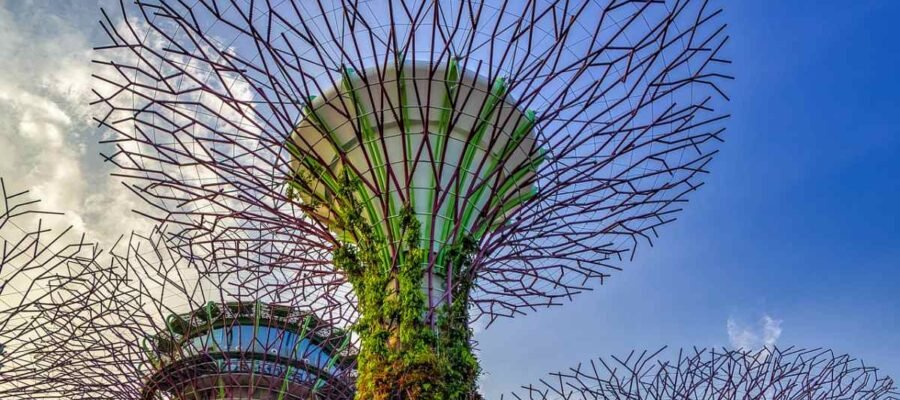
Architecture has always reflected society’s desires and, in the current context, the search for sustainable solutions has never been more urgent.
In response to climate change and the depletion of natural resources, solarpunk emerges, a movement that combines technology, ecology and futuristic design to create harmonious and sustainable urban spaces.
More than an aesthetic, solarpunk proposes a new way of building and inhabiting cities, where nature and technology coexist in a balanced way.
Solarpunk is a cultural and aesthetic movement that imagines a future in which humanity takes advantage of technological advances live in harmony with the environment.
Unlike other sustainable approaches, which focus more on reducing negative impacts, solarpunk seeks to transform cities into regenerative spaces, where urbanism merges with nature to create a balanced ecosystem.
In architecture, this concept translates into spaces designed to harness solar energy, incorporate vegetation and use sustainable materials.
Solarpunk cities are designed to promote more connected and resilient communities, where technological innovation is an ally in preserving the environment and quality of life
Solarpunk architecture combines traditional elements of sustainable building with futuristic, high-tech concepts. These are some of the main aspects that define his constructions:
Use of renewable energy
The transition to clean energy sources it is one of the pillars of solarpunk. Buildings designed according to this philosophy make extensive use of solar panels, urban wind turbines, and geothermal energy capture systems.
The goal is to make each building self-sufficient from an energy point of view, reducing dependence on public networks and minimizing the carbon footprint.
Integration with nature
In solarpunk, green roofs, vertical gardens and living facades are common elements, which help improve air qualityreduce the temperature of cities and guarantee well-being for the inhabitants.
Green architecture is also explored, using organic and nature-inspired forms to create more fluid and pleasant spaces.
Sustainable materials
The choice of materials plays an essential role in solarpunk architecture. After all, the use of recyclable materialsbioplastics, certified wood and ecological concrete reduce the environmental impacts of construction.
Another important point is that solarpunk projects prioritize the reuse of existing structures whenever possible, avoiding waste and promoting a circular economy.
Biophilic design
Biophilic design is the direct interaction between natural elements and built spaces. Solarpunk architecture enhances this connection by maximizing natural lighting, promoting cross-ventilation, and including outdoor living spaces.
The result is healthier and more productive environments, which encourage a closer relationship between people and nature.
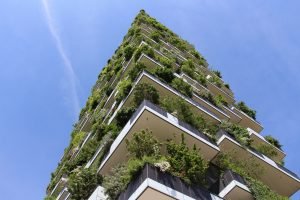
Vertical Forest, in Milan.
Several projects around the world are starting to incorporate the principles of solarpunk, both through and through innovative buildings or more sustainable urban planning.
An example is the Bosco Verticale, in Milan, a set of residential towers covered with native vegetation, which contribute to reducing urban pollution. Another is the city of Masdar, in the United Arab Emirates, designed to be completely sustainable and powered by renewable energy.
Ecovillage projects around the world also embrace solarpunk principles, promoting sustainable, interconnected communities.
The solarpunk movement is a concrete proposal to transform architecture and urban planning in a sustainable way. But despite offering promising solutions, there are still significant challenges to its widespread adoption.
The main obstacle is the initial cost of sustainable technologieswhich is often high. However, as new innovations emerge and manufacturing costs decrease, these solutions are expected to become more affordable.
Another challenge is the resistance of urban policies and regulations that still favor traditional construction models. On the other hand, growing environmental awareness and interest in more sustainable ways of living are driving acceptance.
Likewise, implementing tax incentives for green buildings and investing in research into innovative materials can accelerate this transition.

About Casoca